

- Immigration News & Updates
- 4 mins
A newly disclosed agreement confirms that TSA has been sharing passenger information with ICE since May 2025. Here's what the agreement says, what's happened since it became public, and what it means if you're flying anytime soon.
A Data-Sharing Agreement, Now Public
TSA and ICE have been operating under a formal information-sharing agreement since May 2025. The public only learned the terms this week, after the watchdog group American Oversight won a Freedom of Information Act lawsuit forcing its release. The agreement leans on the 2008 Secure Flight Final Rule, originally written to govern passenger data for aviation security, as the legal basis for sending that same data to immigration enforcement.
How much of it is actually public is a separate question. The appendices that would spell out exactly what passenger data changes hands were redacted before release. American Oversight says the full scope of the arrangement, including whether U.S. citizens have been swept into it, still isn't known.
What is known is how it's being used. Reporting on the documents shows ICE arresting travelers directly at check-in counters and boarding gates, most often people with expired visas. But immigration attorneys say some of those detained had pending asylum cases or other forms of lawful status, not just visa overstays. An internal memo reviewed by ABC News puts the count so far at 27 arrests across nine states.
Why It's Getting Attention Now
Part of what makes this development notable is the gap between what officials have said publicly and what the documents show. A TSA official testified to Congress this month that passenger data was not being collected for immigration enforcement purposes. The released agreement, and the reporting built on it, has raised questions about that testimony.
TSA has said it is acting within its authority to share information across the Department of Homeland Security. The agency has not detailed exactly what passenger information is shared with ICE or how it's used once received.
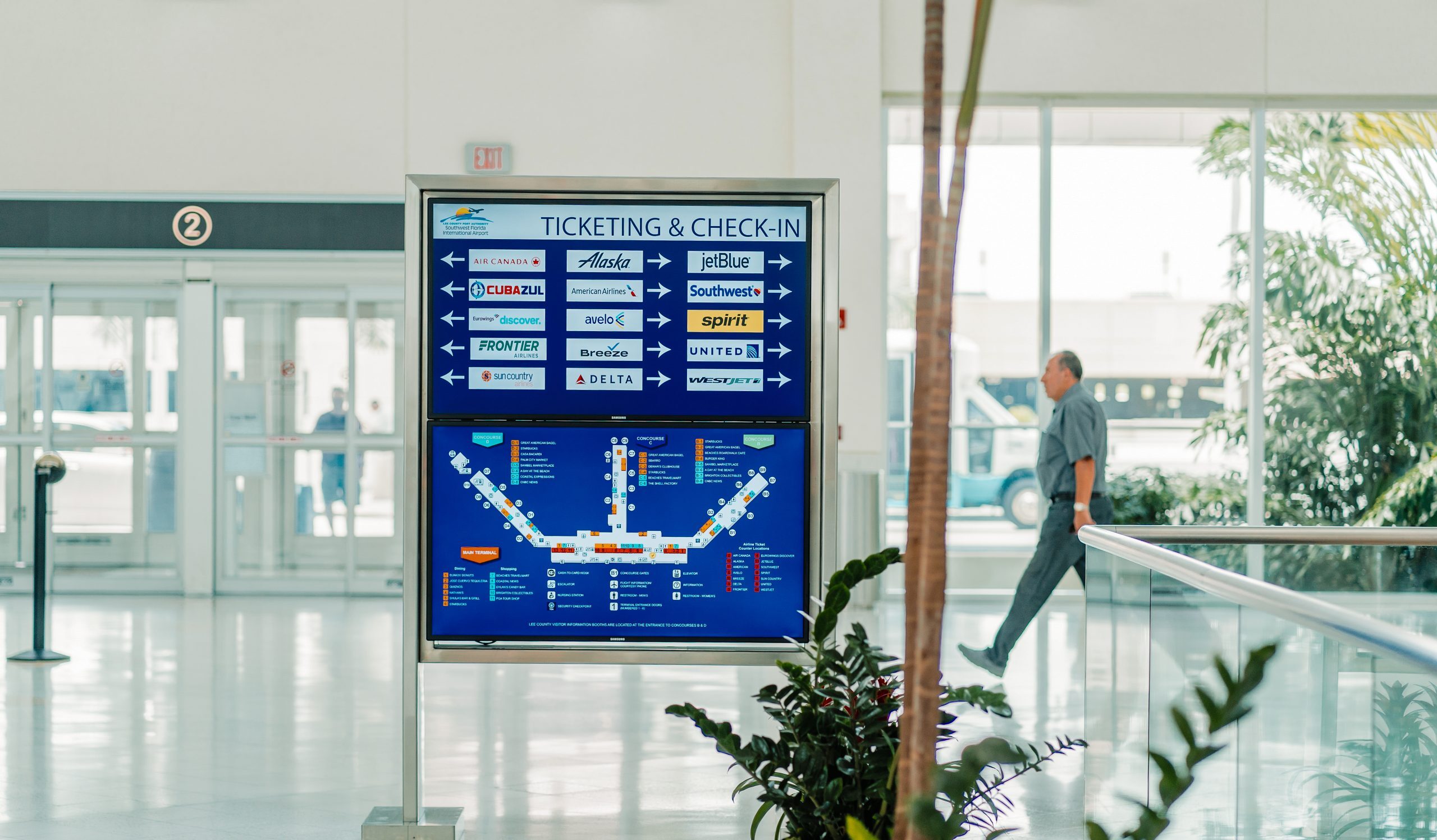
Southwest Florida International Airport (RSW), Fort Myers.
A Heads-Up If You're Traveling
This doesn't mean you shouldn't fly. It means it's worth being prepared, the same way you'd prepare for any interaction with a government agency. Three things to keep in mind before your next trip:
Carry physical documents, not just photos. Bring a visa, green card, work permit, or a receipt notice for a pending application in paper form, in addition to anything on your phone.
Know what you can ask. You have the right to remain silent and the right to calmly ask whether you're being detained or free to go. Green card and visa holders should still expect to show documentation when asked.
Talk to an attorney before you book, not after. This matters most if you have a pending case, an old removal order, or you're unsure how your specific status could be affected.
Traveling Soon and Not Sure Where You Stand?
A short conversation before you fly can answer questions no article can. Every case is different.
Schedule a consultation →Individual immigration cases depend on each person's specific circumstances and should be evaluated individually. This article is for educational purposes only and does not constitute legal advice.