
- Immigration News & Updates
- 6 mins
The U.S. Citizenship and Immigration Services (USCIS) and the U.S. Department of State are expanding social media screening to more visa applicants as part of a broader push toward stricter vetting. Many applicants are now asking whether immigration officers can review their social media during the visa process and how it could affect their case.
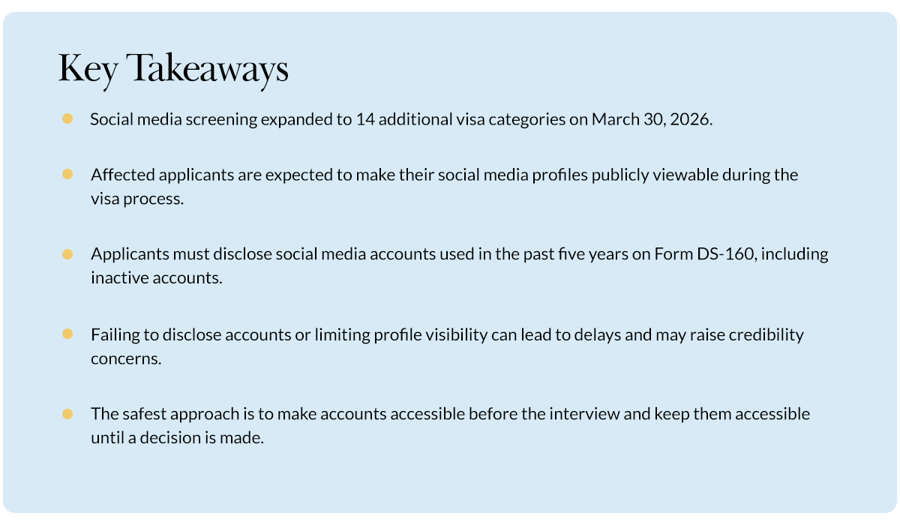
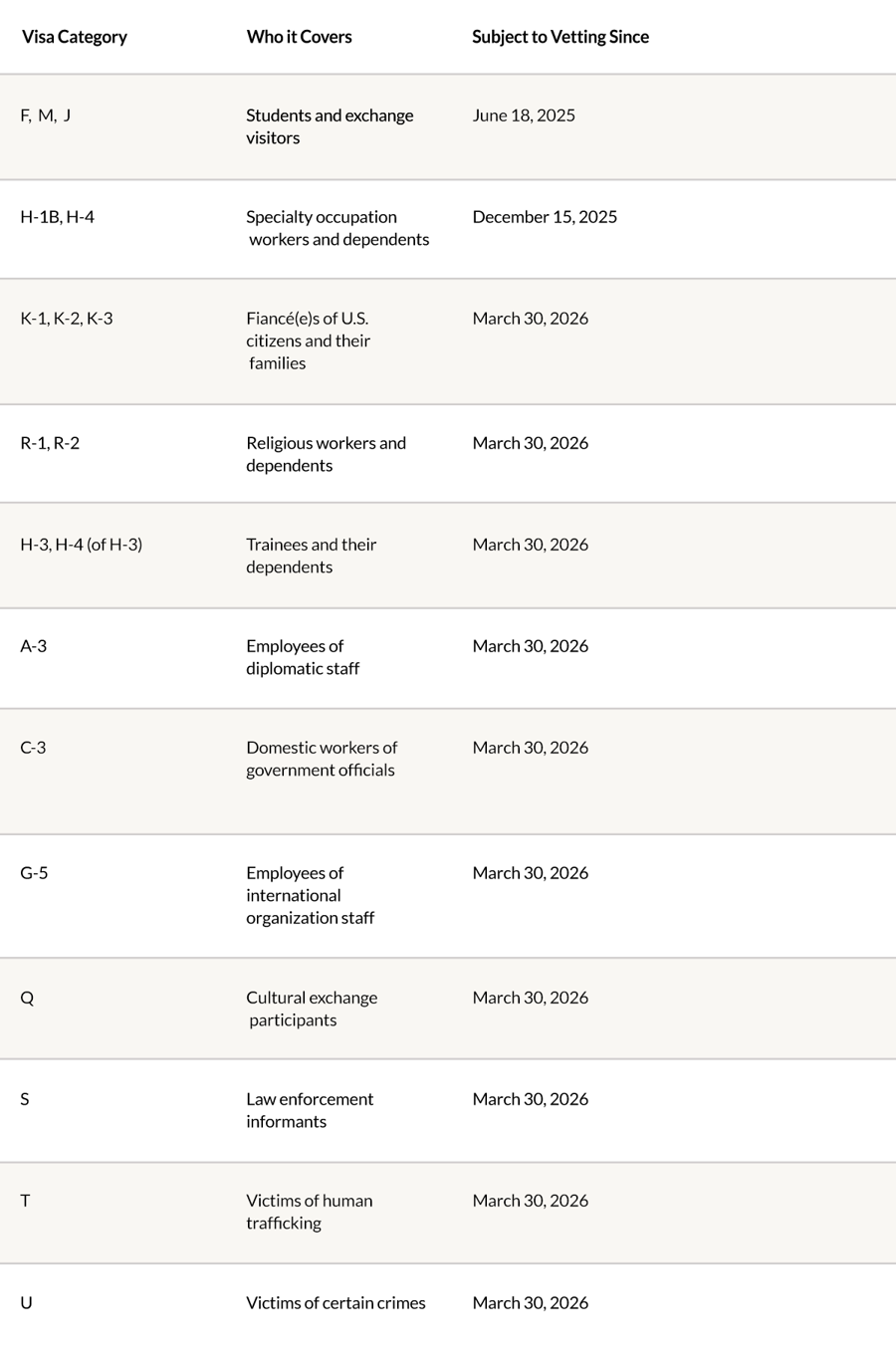
Effective March 30, 2026, this expansion adds 14 additional visa categories, including K visas, religious workers, trainees, domestic workers, and humanitarian visa applicants. Earlier rounds had already applied social media review to F, M, and J applicants in June 2025 and to H-1B and H-4 applicants in December 2025.
If you are applying for one of the affected visa categories, or plan to apply soon, here’s what this means for you.
What Changed, and When
Social media screening isn’t new. The State Department first expanded it to F, M, and J visa applicants (students and exchange visitors) in June 2025, then extended it to H-1B workers and their H-4 dependents in December 2025.
The March 30, 2026 update marks the third and largest expansion so far, adding 14 more visa categories.
What Applicants Must Do
If your visa category is affected, there are two key expectations.
1. Make your social media profiles publicly viewable
Consular officers may review your accounts as part of the decision process. This applies across platforms, even if you do not actively use them.
2. Disclose all social media accounts on Form DS-160
You must list every account you have used in the past five years, including inactive ones. Leaving out an account can raise credibility concerns.
There is no clear guidance on how early profiles should be made public. The safest approach is to update your settings before submitting your application and keep them accessible until a decision is made.
Who Is Most Affected
This expansion stands out because of how broadly it applies. Earlier updates focused on employment and student visas, where applicants often have guidance from employers or schools. This round includes several categories where applicants are more likely to navigate the process on their own.
- K-1 fiancé visa applicants. A common family-based pathway used by U.S. citizens bringing a foreign national partner to the United States to marry. K-2 and K-3 visas are also included.
- R-1 religious workers and R-2 dependents. This includes pastors, priests, rabbis, imams, and other religious workers, along with their families.
- T and U visa applicants. These visas are designed for victims of human trafficking and certain crimes, making this group especially sensitive.
- H-3 trainees and their dependents. Individuals coming to the United States for training programs are now included.
- A-3, C-3, and G-5 visa holders. These categories cover personal employees and domestic workers of diplomats and international organization staff.
- Q and S visa applicants. Cultural exchange participants and individuals assisting law enforcement are also affected.
What the State Department Is Looking For
The U.S. Department of State has stated that social media screening is used to identify applicants who may be inadmissible to the United States, including those who may pose a risk to national security or public safety.
Internal guidance has further indicated that officers may look for signs of hostility toward U.S. citizens, institutions, or laws, as well as any indication of support for designated terrorist organizations. Screening may also include review of content related to harassment or threats of violence.
Consular officers have broad discretion in how they interpret what they find. There is no clearly defined public standard for what specific content may lead to additional review or denial, which means each case may be evaluated differently.
What Happens If You Do Not Comply
If your social media accounts are not publicly viewable at the time of your visa interview, you may be asked to update your settings. However, this is not just a routine step.
Limiting access to your profiles or failing to disclose an account may raise concerns during the review process. This can lead to delays and, in some cases, a denial of your application.
Omitting accounts or providing incomplete information may also affect your credibility. Even if the content itself is not an issue, inconsistencies can still become part of your record and impact how your case is evaluated.
Practical Steps to Take Now
If you are applying under one of the affected categories:
- Review all social media accounts you have used in the past five years, including inactive profiles
- Make your accounts publicly viewable before your interview and keep them accessible during processing
- List every account accurately on Form DS-160 and include it if you are unsure
- Speak with an immigration attorney before your interview if you have concerns about your content
- Keep a record of all disclosed accounts as part of your application materials
The Bottom Line
Social media screening is becoming a more common part of the visa application process as the government continues to expand its vetting procedures.
While this may feel like a significant change, the core application process has not changed. Most applicants who provide accurate and consistent information will still move forward without issues.
Schedule a consultation to speak with the DeMine Immigration team and learn how we can support you and your family through your immigration journey.
Disclaimer: This blog post is intended for general informational purposes only and does not constitute legal advice. Laws and proposed legislation are subject to change. Please consult with a qualified immigration attorney for advice specific to your situation.